
Last Updated on September 4, 2022
Learn How To Save Money at The Grocery Store
Buying groceries seems to get more and more expensive every day (even if you choose to order food). In this context, some people ask themselves how to save money at the grocery store. Saving money on groceries is not easy, but it is manageable. You have to adjust to a budget and make more cost-efficient choices when buying groceries. Don’t fret.
By no means does cutting down on grocery expenses translate into starving. With our tips and budgeting methods, you’ll enjoy the same diet and see the difference in your pocket. Learn how to save money at the grocery store in simple steps.
How to Save Money at the Grocery Store with a Shopping List
Who has time for shopping lists these days? It sounds so old school. A shopping list is an excellent way to save money. This is a simple method to budget for your grocery shopping.
It can also work as a basic budgeting method. You first write down all the items you need. Then, you write down the price per item. You can also look up grocery item prices online in stores such as Walmart. After that, add up all the amounts and see how much you need.
This is the budget you should limit yourself to. You can also add a buffer of 10%. Prices might have increased in the meantime. You might not find the brands you were looking for. It’s ok to have a buffer and spend it.
Here is an example of a potential grocery budget plan:
Budget | $100 |
Buffer (10%) | $10 |
Total budget with buffer | $110 |
Item 1 | Price |
Item 2 | Price |
Item 3 | Price |
You can quickly write down a budget plan like this after you find out the prices of the products you want. Take it with you and use it as a shopping list.
Avoid spending more than you planned, which may happen when you go shopping unprepared. By unprepared, we mean having no plan regarding what you need to buy. Need is a keyword here, because impulsive buying is what usually drains people’s budgets. It happens when you don’t have a clear goal in mind. You know you need food, but you don’t know what or how many items.
A shopping list can prevent frivolous spending. It helps create a firm plan and a fixed budget to stick to. To make this work, you can go even further. Leave all your credit cards at home. Only take cash with you and only the approximate amount you calculated for your groceries. This way, even if you want to spend more, you won’t have the possibility.
Watch out for Discounts and Special Promotions
Promotions are usually meant to catch the eye, but sometimes they don’t. Some brands have more money to invest in marketing. These are usually those that afford to offer promotions more often. It’s ok to only go for bold promotions in the beginning.
Watch out for discount signs and offers. Some are so striking you simply cannot ignore them. Usually, you will see them at the entrance of the store or aisles. Another common marketing tactic is displaying them on the shelf at eye level. Watch out for these easy-to-notice promotions.
Then, as you start paying more attention to discounts, you will observe them faster. You will find the offers more easily as you develop this skill. and spot any discounts, even those on the lower shelves.
The point is to take your time while you shop. Don’t rush to fill the cart with the first thing that grabs your attention. Even if a product is on sale, take another look around. You might find a similar one with a better discount.
Try to take advantage of as many discounts as you can find. Think about what paying 10% less each time on groceries would mean over a year. Another good way to find offers is to check out the grocery store’s discounts online. You can find out what they have on offer before you get there. If there is a good promotion on something you like, you can even buy more items. Just make sure to check the expiration date.
Coupons are another excellent idea to save money on groceries. It does take time and patience to collect them, but it is rewarding, especially if you gather a large number. Check out your mail and see what coupons you can get. Cut them and have them on hand the next time you shop for groceries.
How to Save Money at the Grocery Store by Buying in Bulk
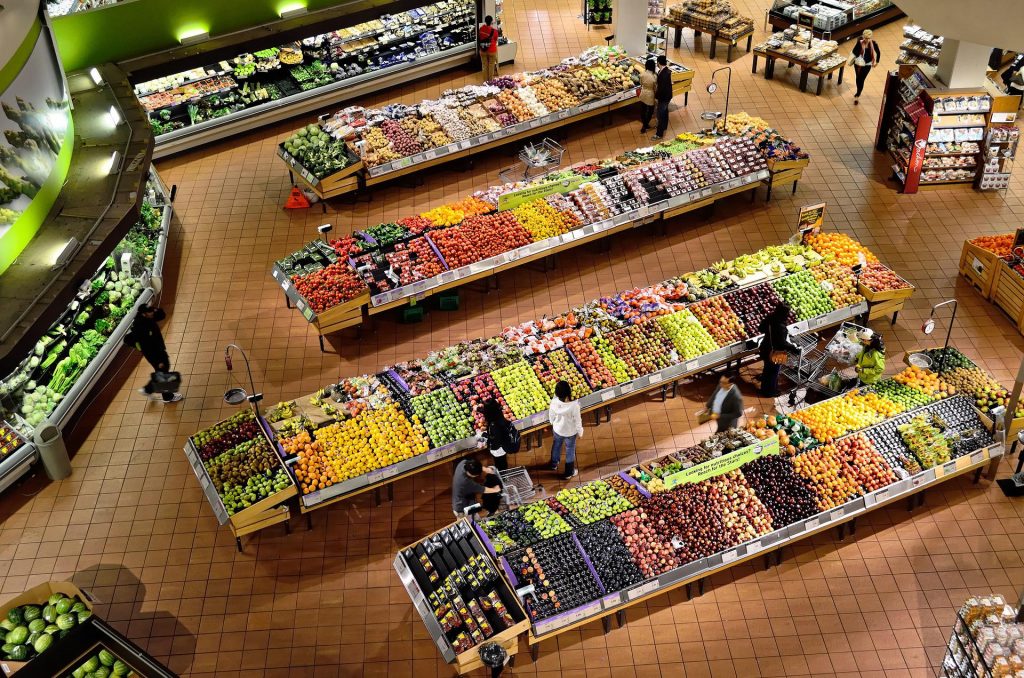
This option may or may not suit your style and wallet. Mathematically speaking, buying in bulk is cost-efficient. You buy more items, and you enjoy lower prices. This sounds great, and some bulk products come really cheap, but there are some downsides too.
First of all, buying in bulk means paying a larger upfront amount. Divided by the items you get, the price is better, but you need more money in your wallet to be able to afford it.
Secondly, buying in bulk might not be practical. If you go shopping on foot at the closest store, you’ll have larger, heavier bags. You might not drive a car. You might also not have a store that offers wholesale products nearby. If all these don’t apply to your case, bulk items are definitely a great way to save money on groceries.
Can Reward or Loyalty Programs Help You Save Money on Groceries?
In theory, these programs for loyal customers do help. To make sure you benefit from the best offers, shop around a bit. Many stores offer special discounts through coupons, discount codes or reward cards. Naturally, the purpose is to turn you into a loyal customer. You’ll shop more often in that store and generate more profit for that company, but you will also enjoy some benefits in turn.
It’s helpful to stay up to date. Check out the products on offer each week and watch out for new reward or loyalty programs the stores might launch. For example, some stores apply a discount on all products for certain buyer categories such as seniors.
Give it a try, especially if there are stores where you enjoy shopping. You can also claim more cards from different stores. Then, use them based on the available promotions. This way, you won’t miss out on great discounts. You’ll also have more chances to nail a good offer on the products you buy more often.
Find the Best Grocery Deals by using Apps
There is an app for almost any task these days. Waiting for the mail to see the stores’ offers printed on paper is one option. There is another solution too: grocery price comparison apps. It’ll be useful for you if you spend a lot of time on your mobile device.
You will find plenty of grocery comparison applications out there. What do these apps do? They help you compare product prices. They point out the best deals based on your search criteria.
Some examples of popular grocery price comparison applications include
- Flipp
- Price Cruncher
- Basket
Apps such as these can also send you notifications. When a new offer is available, you’ll know it. This way, you won’t miss out on buying your favorite product on sale.
Use Curbside Services to Avoid Spending More
There is a certain thrill and joy in shopping. You feel it even when you only buy food and cleaning products. Love for shopping and money-saving goals are often incompatible.
To avoid frivolous shopping, you can use curbside services. Many stores, such as Walmart, offer it nowadays. This option allows you to place an order online. The store will have everything ready for you. All you have to do is drive there and pick up your bags. That way, you stop buying non-essential items on impulse.
Buy the Grocery Store’s Own Brand
That is usually a good way to save bucks on groceries. Many big grocery stores have their own products. These can range from dairy products to sweets, cleaning products, or skincare products. The advantage is that these typically cost less. The difference is usually considerable compared to big brands.
Here is a quick price comparison including Walmart’s brand, Great Value, and other brands (note that these prices are as of July 2022, and are subject to change).
Walmart’s Great Value | Other Brands |
Product/Price | Product/Price |
Great Value Sliced Hickory Smoked Original Bacon, 16 oz: $4.48 | |
Wonder Bread Classic White Sandwich Bread, Sliced White Bread, 20 oz: $2.72 |
If you like grocery store brands, take advantage of them. In terms of quality, many of these products may be as good as those provided by big brands. You can opt for these alternatives, at least for some spending categories.
You might not be ready to give up your favorite coffee or chocolate brand, but you could buy detergent, orange juice, or kitchen towels from a generic brand. You might not even notice any difference after switching the brand.
Summing up, some of the advantages of buying the grocery’s own brand include:
- Lower prices
- Product variety
- Quality
Change the Grocery Store Where You Shop
Some grocery stores simply make you fall in love. You like everything about s